
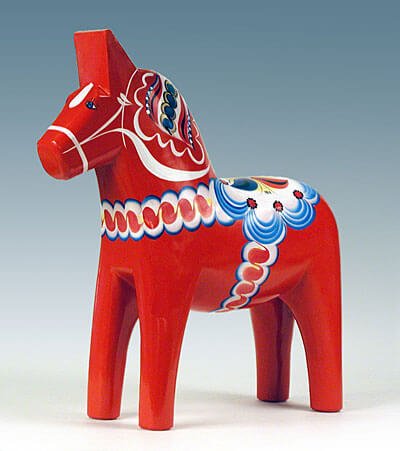
Horsing around
During the last few weeks, there have been findings of horsemeat in frozen food, labeled beef, in many European countries. This has upset a lot of people, created large headlines, and forced producers to withdraw large quantities of frozen and canned food, such as meatballs, sausages, meat pies, pasta sauces, lasagne, etc. Thousands of microwave dishes have been DNA-tested to establish what kind of meat that has been used.
One of the companies that have been hit is Swedish IKEA, which has been serving “Swedish meatballs” with lingonberry jam in its inhouse restaurants in almost every country in the world. But stay calm: meatballs will be back on the menu again after a meatball moratorium to find another, horse-free, food supplier.
Horse meat labeled beef has also been found in England, France, Ireland, Poland… triggering furious outcry. A different but really big problem turned up for a food producer in Iceland. One of its main products, a meat pie, containing 30% ground beef according to the list of ingredients, caused a problem in the lab. Testing for horse DNA, they couldn’t find any substance at all of animal origin in the meat pies… The owner of the factory is still trying to figure out how the typo in the label went undetected for so long… “Meat Pie”. (?)
The main problem with the horse meat is of course not the horse meat itself – most reputable chefs mean that fillet of horse tastes better than fillet of beef, and has a higher nutritional value – the real problem is that you can’t trust the label. This is a serious problem that needs serious attention, justifying the ongoing investigations.
(A questionable side effect of this is that thousands of tons of perfectly good food are withdrawn and incinerated because the label is wrong.)
Now there are of course people who refuse to eat horse for various reasons. Some are horse owners, attached to their big pet/companion. Others have less clear reasons, such as considering horses to be in the same league as dogs and cats – you just don’t eat dogs. Or horses. You eat cows, pigs, chicken and turkey.

This carving on an ”image stone” in Gotland depicts Sleipner, Oden’s grey eight-legged horse who was faster than the wind.
But why not horses? The reason goes back to 732 AD, and the name of the reason was Gregorius II, occupation: pope. Christianity was fighting its way up in Europe, and one problem on its way was that people in northern Europe, including Sweden, didn’t want to forsake their great pagan feasts, with an abundance of beer and huge steaks. Horse steaks, that is. The pope realized that he couldn’t forbid beer – if he did, he would have to forbid wine as well, and the people in Italy would make sure that his days in the Vatican were ended very soon. But he could ban horse steaks, since they weren’t so common in Italy anyway. So he did.
Appointing the missionary Bonifacius to archbishop of Mainz (Germany), the pope Gregorius II also instructed the new archbishop to forbid eating of horsemeat. The Catholic ban on horsemeat persisted some 800 years, until Martin Luther et al broke free from the Catholic Church. However, since people weren’t used to cook horse, it was regarded with suspicion and never became a big success. And the demand has been continuingly low until today, even if horsemeat has been available, at least in some butcheries.
One funny thing though is the fact that in Sweden, after the last few weeks’ horsemeat scandal, the demand for tenderloin and steaks from horse has grown. I would say for good reasons: there’s no better meat than fillet of horse…
Go vegan… it’s less bloody.
Maude: I can’t argue with that :-). But people in other countries eat frogs, snails, rats, and insects (and even dogs), and since man’s digestive tract obviously is designed to handle substances of animal origin, it can’t be considered unnatural. And while there still are a few omnivores around, I think it would be a waste to incinerate all food containing horse meat.
That’s pretty interesting, Thomas! I hadn’t heard about how the Catholic ban on horse meat came to be. But I had read how, when the Icelanders decided to accept Christianity in AD1000, they did so only with some compromises – one was that people be allowed to continue their pagan worship in private, another that would allow exposure of infants, and the third: people would be able to continue to eat their horse meat! Some habits die hard, I guess.
Leslie: Thank you, I didn’t know about the Icelandic exceptions!
Yes, old habits and paganism (which is a Christian concept!) die hard: the Swedish king Olof Segersäll was dethroned for having converted to Christianity.
But historians always try to embellish the ruling dynasty; thus, the later Swedish king known as Erik den Helige (St. Eric), the ancestor of Eriksätten (the Eric dynasty), was in fact an ardent heathen and didn’t make a crusade to Finland, as later chronicles tell. Many years after his death, the pope refused the petition to canonize him, but he is still called “Saint”, and is regarded patron for the Swedish nation. Stockholm City’s coat of arms is an idealized portrait of him.