food

More horsing around

Thank God for the food!

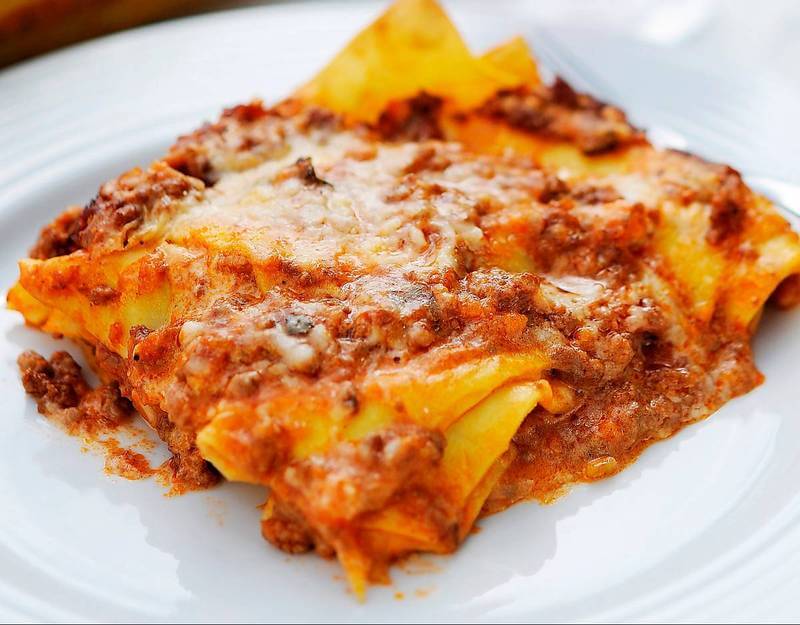
A tasty and wholesome serving of lasagne, possibly made with horse meat.

A tasty and wholesome serving of lasagne, possibly made with horse meat.

This pious exclamation comes from reverend Nils Lidskog of St. Clara parish in Stockholm’s downtown. He has just been told that the church is about to receive 5 tons of lasagne.

Remember the European horse meat scandal a few weeks ago? The content of beef in frozen and canned food from several providers was found to be fraudulent – DNA analysis showed that the beef was in fact horse meat. Tons of food had to be removed from stores all over Europe, only to be disposed of.

One of the distributors that encountered this problem is Axfood, a major grocery wholesaler in Sweden.

In practise, the problem consisted of  5,000 kg frozen lasagne that couldn’t be sold. The lasagne was produced in Luxembourg, but the producer – who claims to be in good faith, having bought what they believed was prime beef – does not want to have the lot sent back. So what to do? Someone recalled having seen food being handed out to homeless people near the church of St. Clara.

Axfood contacted Livsmedelsverket – the Swedish equivalent to FDA (without the drug part) – and asked if giving away the whole lot to people in need could be permitted. The answer was positive: Livsmedelsverket had no objections against the idea, provided that the outer packaging (with the false list of ingredients) was removed, and every item must be provided with a correct list of ingredients.

(Meat from horses is in fact an excellent nutrient with even better nutritional value than beef. The sparse presence of horse meat in human food is believed to be entirely habitual, originating from ecclesiatical interdiction and superstition.)


People queueing for food outside St. Clara church, in Stockholm’s downtown. Picture from dagensarena.se

People queueing for food outside St. Clara church, in Stockholm’s downtown.
Picture from dagensarena.se

At Axfood, people are now cutting off the outer wrapping from some 15,000 packages of frozen lasagne, replacing it with a new list of ingredients. The lasagne will then be delivered in small lots to St. Clara church, starting with the first shipment on March 22.

Reverend Lidskog is grateful for the contribution to the charity work, which among other things means that food is handed out to more than a hundred people every day.

Note: Yes, we have homeless people in Sweden. During the last decade, the number has increased by almost 100%. The number of homeless people in Sweden (pop. 9,600,000) today is estimated to be 34,000.

The city of Stockholm (pop. 1,400,000) estimates the number of homeless people in the city to about 2,900, thereof less than 500 that sleep in open air, shelters, subway stations or doorways.

In addition to these figures, there is an unknown number of hidden homeless people, often migrants from other countries in EU who haven’t been able to find a job, sleeping on friends’ couches. These usually do not fit the common perception of what a homeless person looks like, since they are healthy and able-bodied, having no mental or drug-related problems.


PS.

Reports have come in that IKEA’s meatball moratorium is coming to an end. Swedish Meatballs (DNA-tested, horse-free, made in Germany ?!) are now being distributed to IKEA’s restaurants, to be served with genuinely Swedish lingonberry jam.


Horsing Around

Horsing around

During the last few weeks, there have been findings of horsemeat in frozen food, labeled beef, in many European countries. This has upset a lot of people, created large headlines, and forced producers to withdraw large quantities of frozen and canned food, such as meatballs, sausages, meat pies, pasta sauces, lasagne, etc. Thousands of microwave dishes have been DNA-tested to establish what kind of meat that has been used.

The red Dalecarlian horse, sometimes used as a symbol for Sweden, is a traditional toy/trinket that has been manufactured in the province Dalarna since the 17th century.

The red Dalecarlian horse, sometimes used as a symbol for Sweden, is a traditional toy/trinket that has been manufactured in the province Dalarna since the 17th century.

One of the companies that have been hit is Swedish IKEA, which has been serving “Swedish meatballs” with lingonberry jam in its inhouse restaurants in almost every country in the world. But stay calm: meatballs will be back on the menu again after a meatball moratorium to find another, horse-free, food supplier.

Horse meat labeled beef has also been found in England, France, Ireland, Poland… triggering furious outcry. A different but really big problem turned up for a food producer in Iceland. One of its main products, a meat pie, containing 30% ground beef according to the list of ingredients, caused a problem in the lab. Testing for horse DNA, they couldn’t find any substance at all of animal origin in the meat pies… The owner of the factory is still trying to figure out how the typo in the label went undetected for so long… “Meat Pie”. (?)

The main problem with the horse meat is of course not the horse meat itself – most reputable chefs mean that fillet of horse tastes better than fillet of beef, and has a higher nutritional value – the real problem is that you can’t trust the label. This is a serious problem that needs serious attention, justifying the ongoing investigations.

(A questionable side effect of this is that thousands of tons of perfectly good food are withdrawn and incinerated because the label is wrong.)

Now there are of course people who refuse to eat horse for various reasons. Some are horse owners, attached to their big pet/companion. Others have less clear reasons, such as considering horses to be in the same league as dogs and cats – you just don’t eat dogs. Or horses. You eat cows, pigs, chicken and turkey.


Horses were important in the old Norse religion and mythology, which didn’t prevent them from being sacrificed and finally eaten during the big midwinter feast.   This carving on an ”image stone” in Gotland depicts Sleipner, Oden’s big grey eight-legged horse who was faster than the wind.

Horses were important in the old Norse religion and mythology, which didn’t prevent them from being sacrificed and finally eaten during the big midwinter feast.
This carving on an ”image stone” in Gotland depicts Sleipner, Oden’s grey eight-legged horse who was faster than the wind.

But why not horses? The reason goes back to 732 AD, and the name of the reason was Gregorius II, occupation: pope. Christianity was fighting its way up in Europe, and one problem on its way was that people in northern Europe, including Sweden, didn’t want to forsake their great pagan feasts, with an abundance of beer and huge steaks. Horse steaks, that is. The pope realized that he couldn’t forbid beer – if he did, he would have to forbid wine as well, and the people in Italy would make sure that his days in the Vatican were ended very soon. But he could ban horse steaks, since they weren’t so common in Italy anyway. So he did.

Appointing the missionary Bonifacius to archbishop of Mainz (Germany), the pope Gregorius II also instructed the new archbishop to forbid eating of horsemeat. The Catholic ban on horsemeat persisted some 800 years, until Martin Luther et al broke free from the Catholic Church. However, since people weren’t used to cook horse, it was regarded with suspicion and never became a big success. And the demand has been continuingly low until today, even if horsemeat has been available, at least in some butcheries.

One funny thing though is the fact that in Sweden, after the last few weeks’ horsemeat scandal, the demand for tenderloin and steaks from horse has grown. I would say for good reasons: there’s no better meat than fillet of horse…


How Pepparkakor Makes My Christmas Swedish

pepparkakorI grew up the daughter of a Swedish immigrant to the US and for us, Christmasjul – was the most important celebration of the year. In the days before email and Facebook and Google hangouts, when Sweden was so very far away that my mom called home only once a year, on julafton (Christmas Eve), Christmas was my mom’s best chance to share with my sister and me what she could of her childhood in Sweden.

These days I have my own household and kids, and I want to make sure that I pass on the same traditions that my mom passed on to me. I start at the beginning of December with my julbaket – my Christmas baking. As far as my kids are concerned, cookies are the most important jul tradition- right up there with the presents! The most significant cookies, traditionally speaking, and as measured by quantity, weight and volume, are pepparkakor – the famous Swedish ginger cookies.

Many celebrations center around special foods, but historically, at least, when Sweden was not as rich as it is now, and when there weren’t supermarkets stocked throughout the winter with a variety of foods, planning the julbordet (the Christmas table or buffet) must have implied a certain calculation, a reckoning of the sacrifices that might become necessary during the lean months ahead. Behind the display of Christmas bounty there lay the fervent hope that domesticated animals would survive the winter on the hay that (hopefully) filled your barn, and that your family could survive on the food stored in your cellar. It must have been a sometimes nerve-wrecking balance to strike: the mandate to mark the solstice (and/or the birth of Christ) today, versus the ongoing goal of survival!

But at this moment in time it’s all about pepparkakor! The dough starts innocently enough in a big heavy pot on the stove, filled with water, sugar, spices, lots of butter and some brandy. Here you can see it all melted together into a beautiful, silky brown liquid that makes the house smell delicious. Stir it and when it is cool add the flour, little by little. Then I let the dough sit out in a bowl, or maybe wrapped in plastic, until the following weekend. Don’t worry, the spices will preserve it; it won’t spoil!

When it’s time to bake, get started by preheating the oven, greasing cookie sheets, and getting out the rolling pins and cookie cutters. My mom always makes her pepparkakor heart-shaped, so that’s what I do, too. To me it wouldn’t seem right to make them any other shape, but there’s no law against it, so you can be as creative as you like. (Also like my mom, I make my smörkakor star-shaped; I’ll bake them when it gets closer to Christmas. I also bake bonnkakor, skärgårdskakor and havreflarn, but I do not roll them out and cut them into shapes.)finished pepparkakor

Pepparkakor are prettiest, and taste the best, if you can roll them out nearly paper-thin. Probably because I only make them once a year, it usually takes me a few sheets worth to get it right. Then I really start to roll! My recipe makes enough dough for 3 or 4 straight hours of baking, and by the end of that time I have three large tins full of cookies and two very sore feet!

I sometimes ask myself, why do this? It takes several hours of prime December weekend time; there are always other things going on and certainly other things that need to be done around the house. I wouldn’t have to bake all these cookies…would I?

Well, the truth is I do have to. I feel a tremendous sense of responsibility, and pride, in carrying on this tradition, and in demonstrating to my children and to myself, in a very tangible way, that, even though we live in the suburban US, where plastic Santas and Black Friday stampedes reign, we stand a bit apart. In our hearts we hold the dark northern sky, the moonlight on the snow, tomten with his sleigh, the julbord by candlelight. The truth is, I will probably still be baking these cookies when I am so old that I can barely stand!

This year we added something new to the big pepparkakor bake. My husband got our Swedish friend Lars to join us via a Google hangout. He gave us the shocking news that, nowadays, real Swedes actually buy their pepparkakor dough at the grocery store! We were horrified! But it’s okay for them, because they don’t have to make any special effort to be Swedish. They are Swedish 100% of the time, no matter what they do.

For me, though, the julbaket is more than just baking. Even more than a Google hangout, participating in this traditional activity shrinks the distance between me and the faraway land of Sweden. All of the effort, the stirring, the kneading, the rolling – even the heat from the oven and my aching feet – add up to time spent with my mother and my mormor and all the women who came before them, planning and preparing a special meal for their families. They accept me into their company, so that I, too, for a few hours at least, am a real Swede!


A Free Lunch – in the Grocery Store!

Today, I spent extra half an hour in my favorite grocery store, eating a complimentary lunch from their julbord, which they put up one day every year a few weeks before Christmas. (Please see explanation of julbord below.)

The julbord is open for all customers, free of charge. You’re invited even if you haven’t been in the store before… you don’t need to buy anything either. Come in and have lunch!

julbord at the grocery store

Store attendants, dressed in red caps and plastic gloves, busy serving up on cardboard plates

julbordI accepted a plate from the attendant with homegrown beard and found two different herrings, a slice of ham, a piece of pate, meatball, wiener, a few more meat dishes, a slice of smoked sausage, a beetroot salad, a cabbage dish, a spoonful of a dish called “Jansson’s temptation”, and a buttered slice of bread. Condiments such as mustard were at the end of the table together with non-alcoholic beverages and a small dessert of rice pudding with raspberry jam. All excellent in taste, premium quality! Yummy!

Munching on jul foodLooking around, there were of course customers munching everywhere, young men eating and trying to maintain a cool and laidback attitude while leaning against the cheese display cabinet, elegant housewives manging their plate and purse with one hand, daddies with cardboard plates on the stroller top, little old ladies with a desperate look trying to balance their plates, handbags and shopping baskets to some place where they could put things down and start eating!

Short explanation of concept:

The Swedish word smörgåsbord is worldwide known as smorgasbord – a buffet of cold dishes, however often with a section with a few hot dishes at the end.
[smörgås = sandwich, bord = table, i.e. smörgåsbord = sandwich table]
For instance, a typical smörgåsbord at a gästgiveri (≈ inn) in Skåne offers at least half a dozen saucers with differently marinated herring, 3-4 salmon dishes (cold smoked, hot smoked, baked, marinated, poached), a few saucers of eel (smoked, grilled, poached), shrimps au naturel, shrimps in eggs with mayonnaise or aioli, a number of meats (lamb, beef, pork, smoked, grilled, sauteed), a number of patees, a number of veggie dishes, … oh yes, there’s also breads and cheeses and potato dishes. If you are really hungry, try real hard and take very small servings of every dish, you might get to taste it all… or no, I don’t think so.

At Christmas time, the smörgåsbord is supplemented with some dishes typical for the season, and renamed to julbord.

[jul = Christmas, bord = table].

little old Swedish ladies

Fridge counters were used as tables by little old ladies.